
Forsyth County Criminal Case Records
A criminal court record is the court case file for a prosecution by the State. In Forsyth County, the Clerk of Superior Court keeps records for both District Court and Superior Court. District Court hears misdemeanors and infractions without jury trials, while Superior Court handles felony criminal matters and other assigned proceedings. The District Attorney for Prosecutorial District 31 represents the state in criminal matters and prepares the criminal trial docket.
The court record can begin with a warrant, magistrate order, criminal summons, citation, indictment, or other charging document, then grow as the case moves through hearings and decisions. It may include docket entries, pleas, motions, orders, trial settings, verdicts, dispositions, sentencing judgments, probation conditions, financial obligations, and appeal entries. A closer look at the charge itself belongs with Forsyth County arrest records and court charges; the full criminal court record follows the whole case.
The N.C. Judicial Branch criminal cases source explains the state court process behind Forsyth County criminal court records.
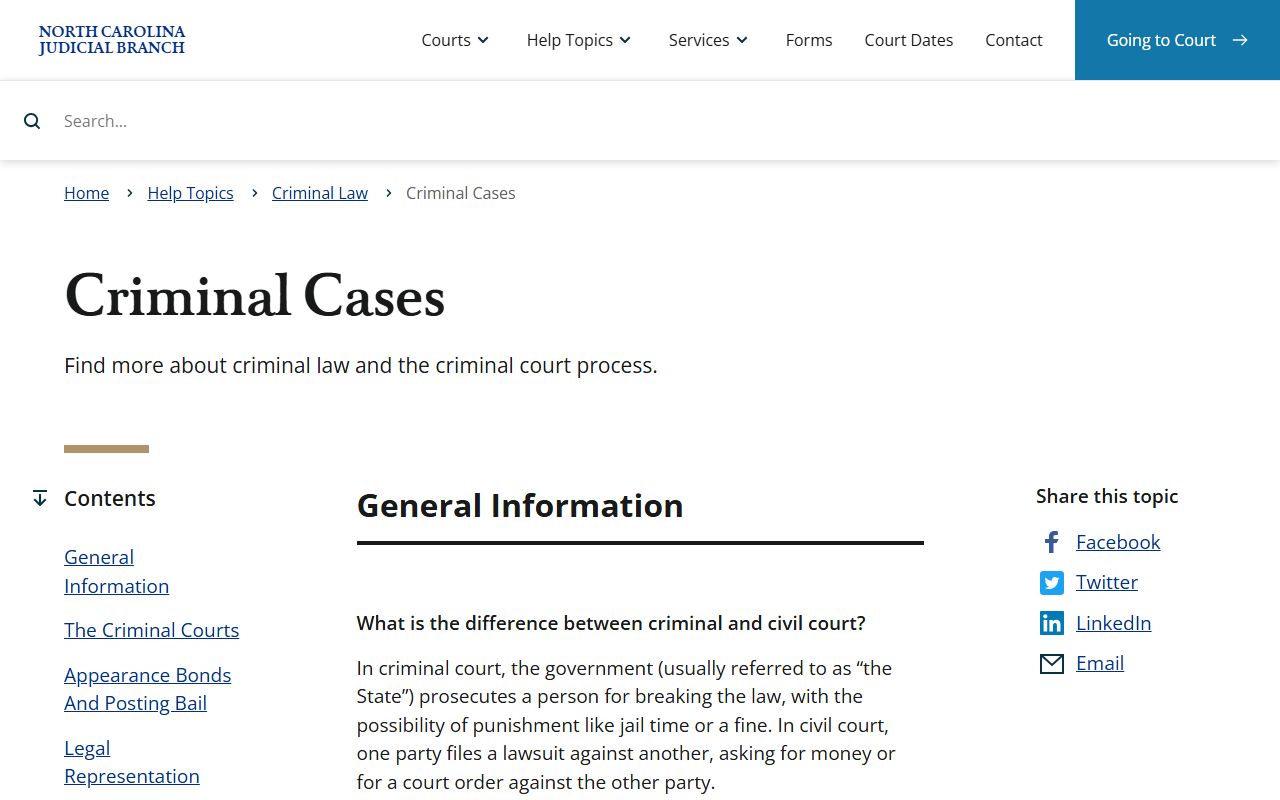
That source supports the focus on the court case, not just the arrest or booking event.
Search Forsyth County Criminal Records
The online first step is the statewide eCourts Portal. Smart Search is used for court records and case information, while Search Hearings is used for court dates and hearings by name, county, date range, and more. Public self-service terminals in clerk offices can also be used for criminal case information. The N.C. Judicial Branch says terminal searches may use defendant name, case number, or victim/witness name.
- Open the eCourts Portal and start with Smart Search for criminal case information.
- Search by defendant name or case number, and use Forsyth County or court division filters when available.
- Open the case result to review case type, charges, public docket events, hearings, disposition, and financial entries.
- Use Search Hearings or local criminal calendars when the main question is the next court date.
- Contact the Forsyth County Clerk of Superior Court for paper file review, copies, or certified criminal case records.
Portal records should not be treated as a background-check product. The research states that the Judicial Branch warns people doing background checks to use the county clerk's office, not Portal alone. For statewide prison, probation, or parole history, the N.C. Department of Adult Correction offender search is a separate system and does not include county jail information.
Forsyth County Criminal Case Flow
Criminal court records are easiest to read as a sequence. The sequence may vary by case, but the record often moves from filed charges to an initial court setting, then pretrial activity, then a plea, trial, dismissal, or other disposition, and finally sentence or compliance terms if there is a conviction. A felony case may have District Court stages before Superior Court action, while many misdemeanor and infraction matters remain in District Court.
Case flow: Charges Filed › Arraignment or First Appearance › Pretrial / Motions › Plea or Trial › Disposition › Sentencing
| Stage | What Happens |
|---|---|
| Charges filed | A warrant, summons, citation, indictment, information, or other charging paper starts the court track. |
| First appearance or arraignment | The court addresses notice of charges, counsel, release conditions, and future settings depending on the case. |
| Pretrial / motions | The docket may show continuances, discovery issues, motions, orders, calendar settings, or plea talks. |
| Plea or trial | The defendant may enter a plea, proceed to trial, or receive another ruling on the charge. |
| Disposition | The record shows whether each charge was dismissed, reduced, found guilty, found not guilty, or otherwise resolved. |
| Sentencing | A conviction can produce punishment, probation terms, restitution, costs, and later compliance events. |
The Chapter 15A source supports North Carolina criminal procedure and expunction rules.
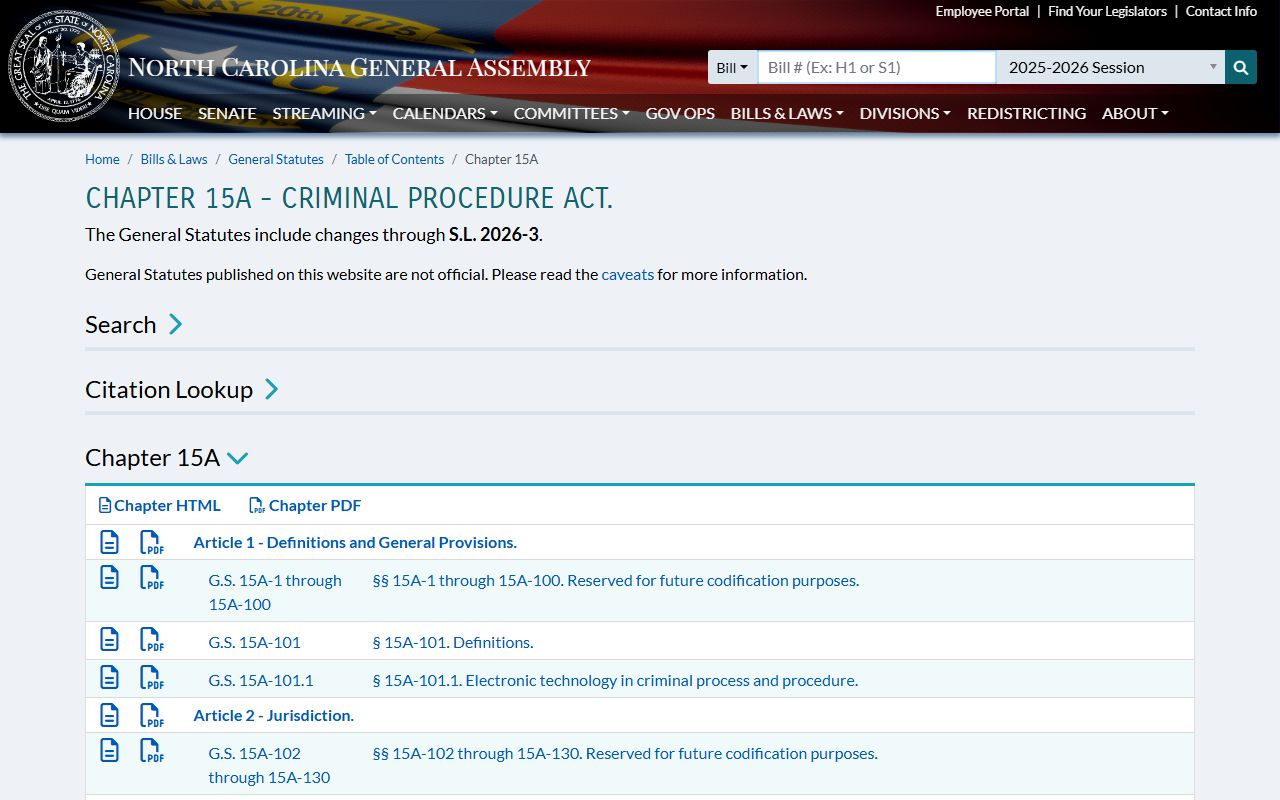
Chapter 15A also explains why eligibility for expunction depends on the exact charge, disposition, and case history.
What Forsyth Criminal Records Show
A Forsyth County criminal court record can contain both summary data and file documents. The public search result may show the case number, parties, charges, hearings, and disposition. The clerk file may contain the underlying warrant, indictment, plea transcript or form, order, sentencing judgment, probation terms, payment records, and appeal entries. Online document access varies, so the clerk office remains the source for complete and certified case material.
| Field | What It Shows |
|---|---|
| Case number | The court identifier used for Portal search, public terminal lookup, calendars, and copy requests. |
| Defendant | The person charged in the criminal case, with public identifiers limited by court rules. |
| Charges | The filed criminal offenses, charge status, and related charging document when public. |
| Court division | District Court for misdemeanors and infractions, or Superior Court for felony matters. |
| Hearings | Court date, time, location, hearing type, judge or magistrate, and public schedule entries. |
| Plea | The defendant's formal answer to a charge when entered and public. |
| Disposition | The outcome of a charge, such as dismissed, guilty, not guilty, reduced, or otherwise resolved. |
| Sentence | Punishment, probation, restitution, costs, and compliance terms after conviction. |
| Restrictions | Sealed, expunged, juvenile, redacted, or confidential entries withheld from public access. |
The court record is also distinct from custody status. A person may have a pending court record without being in jail, or may be in custody while court entries lag. Current custody questions belong with the sheriff's jail channel, while the criminal court record tracks the prosecution.
Charges vs Convictions
A charge is an accusation filed through a criminal process. A conviction is an outcome after a guilty plea, verdict, or other finding of guilt. Forsyth County criminal court records may show charges that were later dismissed, reduced, amended, or ended in a not guilty result. That distinction is central when reading a case file because a record can list several charge lines with different outcomes.
| Topic | Charge | Conviction |
|---|---|---|
| Meaning | An accusation or filed offense. | A finding or admission of guilt. |
| Record stage | Appears early in the case and may change. | Appears after plea, verdict, or judgment. |
| Possible result | Dismissed, amended, reduced, tried, or resolved by plea. | Sentence, probation, costs, restitution, or appeal may follow. |
| Public reading | Do not treat as proof of guilt. | Read with sentence and any later relief or appeal. |
Note: A dismissed charge may still appear in a public case history unless it is sealed or expunged.
Forsyth Criminal Dispositions
A disposition is the outcome of a case or charge. In a Forsyth County criminal court record, a disposition line should be read with the charge, plea, hearing history, sentence, and any later order. One case may contain multiple charges with different dispositions. A sentence may include active punishment, probation, restitution, fines, court costs, or other conditions, depending on the record and court order.
Several terms help interpret the record. A motion is a request asking the court to act. A continuance postpones a hearing or trial. Bond refers to money or conditions used to secure release and future court appearance. Restitution is payment ordered to compensate a victim. Probation is supervised release under court-ordered conditions. An appeal entry signals review by a higher court under case-specific rules.
The Find Your District Attorney source identifies the Forsyth County District Attorney for Prosecutorial District 31.
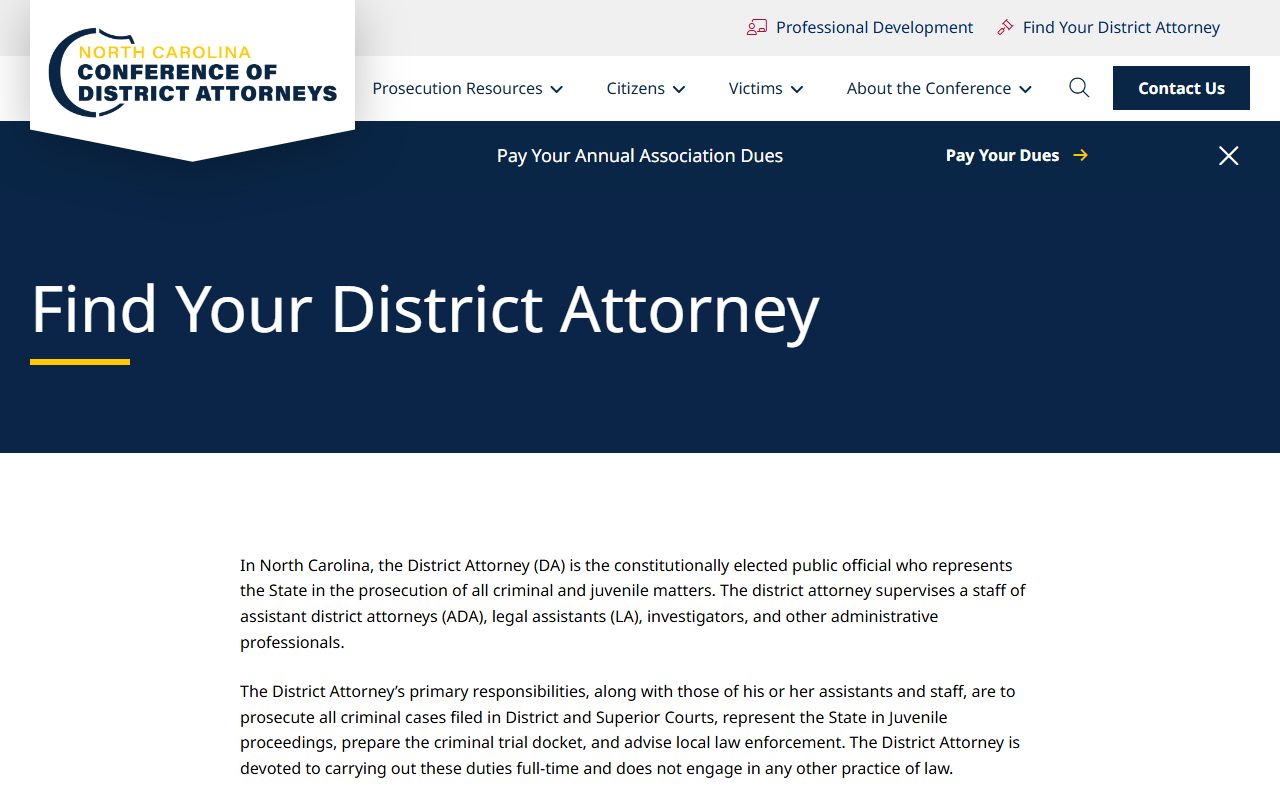
The District Attorney role matters because that office represents the state and prepares the criminal trial docket.
Sealed vs Expunged Records
Sealing and expunction are not the same. A sealed record is hidden from general public access by law or court order. An expunged record is removed from public access under court order and North Carolina statutory rules. Some agencies may keep limited nonpublic access after relief is granted, but the public case search should no longer display the record in the same way.
| Topic | Sealed | Expunged |
|---|---|---|
| Public visibility | Hidden from general public access. | Removed from public court and law-enforcement access according to the order. |
| How it happens | By statute or court order. | By petition or application if North Carolina eligibility rules are met. |
| Eligibility | Depends on record type and legal basis. | Depends on charge, disposition, conviction type, waiting period, and prior record. |
| Examples | Juvenile, adoption, mental-health, or sealed case material. | Dismissed charges, not-guilty findings, some nonviolent convictions, and other eligible records. |
A person seeking expunction usually files in the county of the case, pays any required cost unless waived, serves required agencies, and waits for court and state-agency review. Eligibility should be checked with the clerk or counsel because North Carolina expunction law is detailed and changes over time.
Forsyth Criminal Records Access
Public access to criminal court records uses several channels. The Portal gives online case and hearing lookup. Public self-service terminals in clerk offices support criminal searches by defendant name, case number, or victim/witness name. Paper files are accessed through the Clerk of Superior Court in the county where the case is located. Staff may provide copies for a fee, and certified copies should be requested through the clerk.
N.C.G.S. 132-6 requires inspection and copies of public records at reasonable times and under reasonable supervision, subject to exceptions. N.C.G.S. 132-6.2 limits allowed fees and states that agencies are not required to create or compile records that do not exist. Court-record procedures also rely on Chapter 7A authority cited by NCAOC.
Criminal court records are not the same as private employment, tenant, credit, or insurance screening reports. A person who needs a compliant background check should use the proper official or regulated channel and should verify records with the clerk when the result matters.
Restricted Forsyth Criminal Records
Several criminal or criminal-adjacent records are restricted. Juvenile delinquency and undisciplined matters are not ordinary public files. Sealed warrants, sealed indictments, unserved process, and investigative search warrants may not be public. Records with Social Security numbers, financial account numbers, protected minor information, or health and mental-health data are redacted or withheld.
Forsyth County also has treatment-oriented court and court-adjacent programs, including Mental Health Court, SUPER through the Stepping Up Initiative, Veterans Court Services, and Adult Treatment or Recovery Court concepts. These programs can be relevant to a criminal case path, but treatment records and behavioral-health information should not be treated as ordinary public criminal case content.
The Forsyth Public Defender source is included because defendants may need to confirm appointed counsel before relying on a case entry.
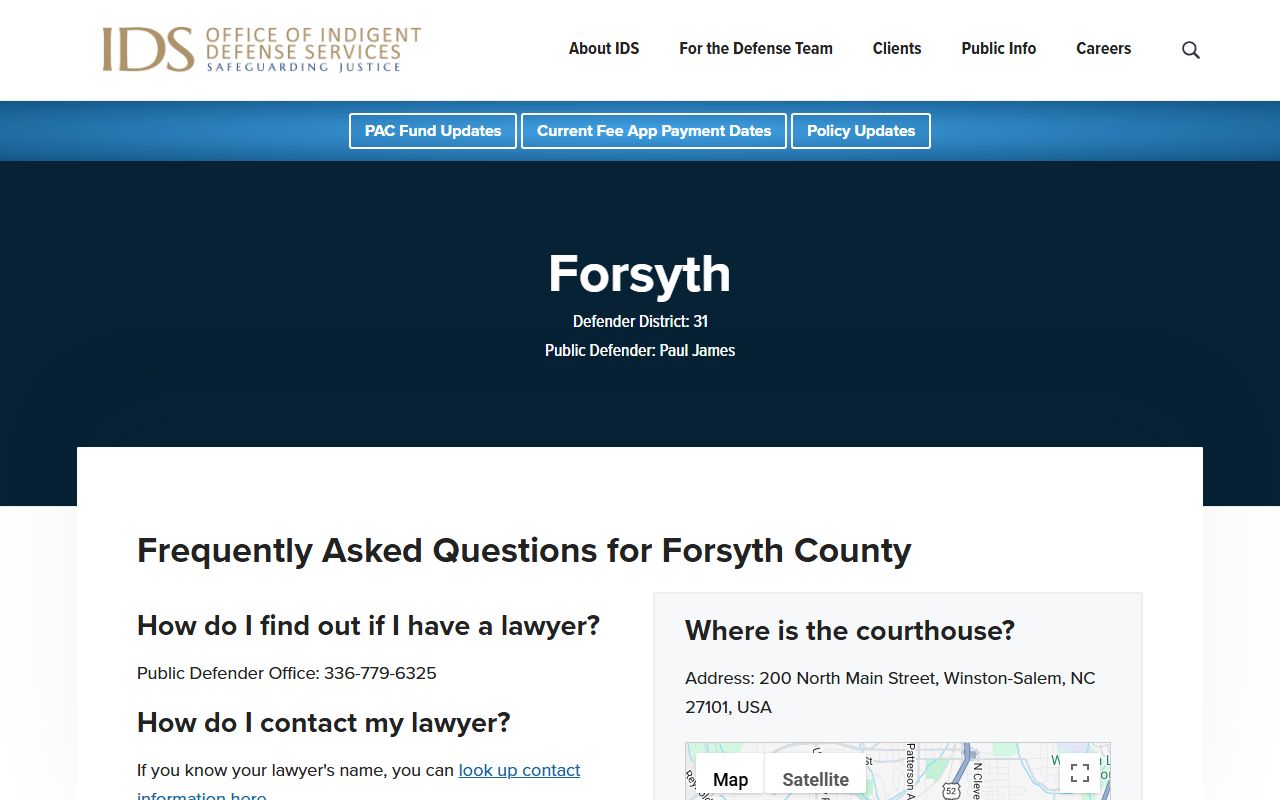
That office is part of the defense side of the criminal process, while the clerk remains the record custodian for the case file.